

Panic Buying explained by Behavioral Science
The Covid-19 pandemic is all over the news around the world. Shoppers are emptying the shelves, stocking up on flour, milk, pasta and toilet paper. This health crisis is giving up a glimpse of customer purchase decisions driven by emotions.
Our behavior in emergency situations is driven by emotions
Although it’s only natural to be irrational in emergency situations, neuroscientists say that 95% of all our purchase decisions are subconscious. All too often we make irrational decisions without our full conscience. We like to follow the crowd so we feel safe. This reminds me of the saying “if everyone around you is in panic and you are the only one that is calm, perhaps you misunderstood the gravity of the situation :D.
Neuroscientists, psychologists, and economists have discovered around 200 cognitive biases that deviate people from the most rational decision-making. Here are some of these ingrained cognitive biases that could explain the pandemic panic-buying spree:
- Our Brains Are Biased Towards Survival – Most cognitive biases arise in the fast-thinking, emotional areas of the brain, which make decisions without our conscious awareness. Responding to fear, hunger and the need to survive is a primary function of those areas. Impending emergencies activate those emotions and can cause irrational reactions.
- These cognitive biases are also applicable in everyday life outside of emergency situations. The rules of thumb exist so that we can make decisions without having to source all available information and do a cost-benefit analysis for all options so we can decide whether to buy Colgate or Aquafresh. There is a lot of scientific research the suggests that without emotions it will be next to impossible to make a simple decision.
- We Feel Safer by Following the Crowd – To help ease our panic, we want to feel secure that we have all we need to survive. News of shoppers queuing up to buy toilet paper and other main necessities triggers the Loss Aversion bias in our brain. We rush to the shops so we don’t miss out. Following the crowd is called the Bandwagon effect.

- Loss aversion implies that one who loses $100 will lose more satisfaction than another person will gain satisfaction from a $100 windfall. Prof. Daniel Kahneman, Nobel laureate for economics, conducts an experiment in which he offers students a head or tails bet. If the student wins, he/she will get $10, if they lose, they’ll be out of pocket by $10. Hardly anyone accepts this bet. The majority only accept the bet when if they win they’d get $25 and if they lose they’ll only pay $10. So the loss aversion is about 2.5 bigger motivator than the appetite for gains. The loss aversion could be a powerful motivator for purchase decisions. Here are some of its applications in marketing:
- Use of Trial Periods – the goal is to remove a barrier i.e. the fear of the customer to make the wrong choice and also to make the customer value more the product/service once it gets to use it in his daily life. This also interlinks with the Endowment Effect, which states that people are more likely to retain an object they own than acquire that same object when they do not own it.

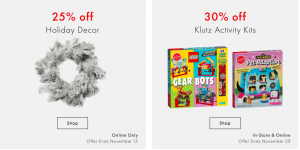
- Time Limitations Can Trigger Action – offering a significant discount for a limited amount of time triggers the fear of missing out on an opportunity. “Save 30% if you order by the end of the week!”, “This Offer Ends Today”.
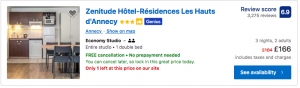
- Limited Availability (Scarcity Effect) Is Another Tool – Booking.com, airlines and many other businesses use this bias to unlock our fear of missing out (missing out on a cheap deal, missing out on our preferred hotel after so much search, etc.). Booking.com displays the number of rooms left in a visible place, which often says “Only 1 room left”. Many other websites are showing “information” about how many other people are currently looking at the same hotel, flight, offer, etc. This creates a competitive rush to buy.
- Temporary Free Add-Ons AlsoBoost Sales – Free bonus offers are a proven method for driving more sales and higher conversion. The impact is increased if there is a deadline to get the free item. To date, I remember how I got a Gatorade bag that I never got to use even once, as well as how I didn’t miss on the chance of getting a free Boss sack by buying one of their perfumes.
- Demonstrate How Your Offer Prevents Losses – A test from a Credit Card Company showed that, instead of talking about the benefits of using a card such as the ability to track spending and more convenience compared to carrying cash, it achieved a better conversion rate by framing these as losses when using cash i.e. inability to track spending and less convenience.
- Why do we do what others are doing? Following the crowd could also be explained with another cognitive bias – Social Proof. According to the professor of marketing, business and psychology Robert Cialdini, who coined the term in his book “Influence: The Psychology of Persuasion”, in ambiguous social situations where people are unable to determine the appropriate mode of behavior and is driven by the assumption that the surrounding people possess more knowledge about the current situation. So we look to others for social proof. This principle is widely used in marketing. Websites like Groupon show you the number of people who bought the deal so you take comfort in behaving the same way others did. Similarly, in B2B, when even small organizations highlight a case study with a well-known organization, it serves as proof of accepted behavior.
- Reviews and Star Ratings also serve as a Social Proof – Authentic testimonials from customers are a powerful tool for boosting sales. Working with an energy company in a competitive market we see customers going to price comparison websites where most not only look at the cheapest price but also look at the star rating and customer testimonials. What’s interesting is that those who had heard positive reviews from people they know weere likely to feel very trusting towards that organization not because they had much experience to form an opinion of their own but because they were expecting to have the same experience as their friends and relatives. So ask for reviews but keep them short for maximum impact. Answer the not so positive ones. Highlight the excellent reviews and overall ratings.
- Celebrity Endorsements are effective, but not as much as those from people who look a lot more like us. That’s why influencer marketing is growing rapidly and many organizations estimate it to be with the highest ROI.
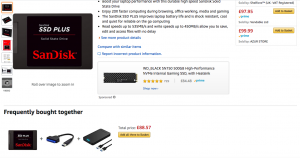
- Offer Add-ons or “frequently purchased together” – Amazon, the largest retailer always displays “frequently bought together”. When you are getting a phone, most retailers also suggest a protective cover and other accessories.
- Why do we panic-buy things we don’t need? Since the beginning of the pandemic, Covid-19 is all over the news and we kept seeing images of shoppers leaving with loaded carts. Thus people are being primed by these images. So people are stacking up on toilet paper, milk, and pasta even though they don’t need them so much.
- Use of Trial Periods – the goal is to remove a barrier i.e. the fear of the customer to make the wrong choice and also to make the customer value more the product/service once it gets to use it in his daily life. This also interlinks with the Endowment Effect, which states that people are more likely to retain an object they own than acquire that same object when they do not own it.